Your deck is an extension of your living space—a place for summer barbecues, morning coffee, and family gatherings. But maintaining that outdoor oasis requires protecting the wood from Pennsylvania and New Jersey’s harsh weather, moisture, and UV damage.
When it’s time to refinish your deck, you face a critical decision: stain or paint? Both options protect wood and enhance appearance, but they deliver dramatically different results in terms of aesthetics, durability, and maintenance requirements.
Let’s break down the real differences between deck staining and painting so you can make the best choice for your outdoor space.
Understanding Deck Stain
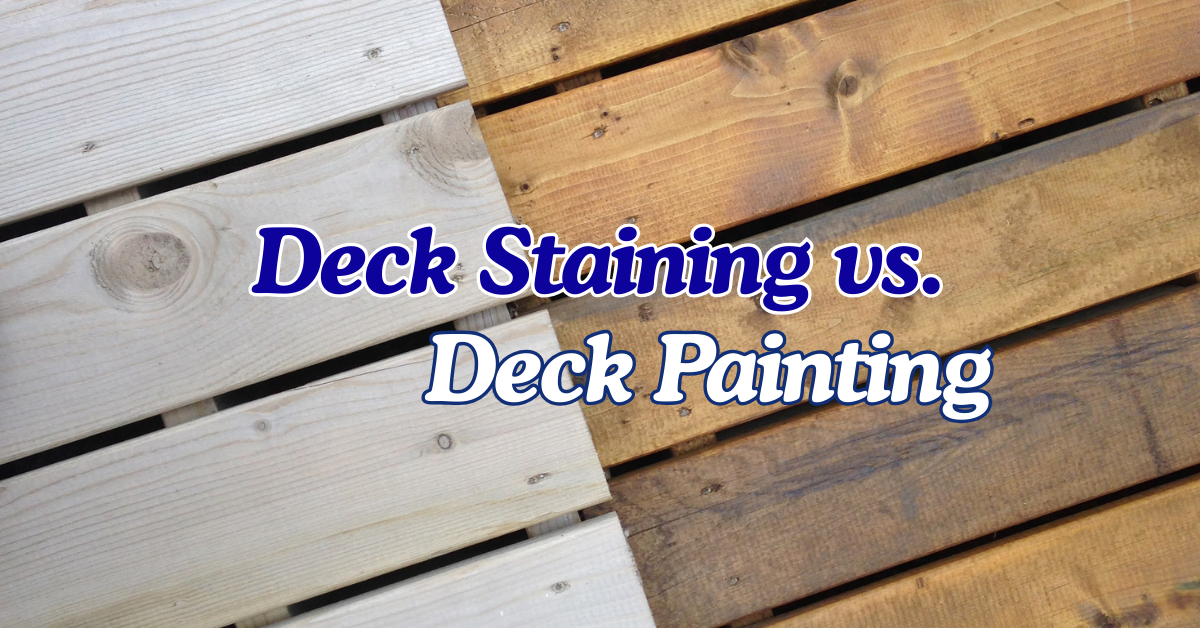
Deck stain is designed to penetrate deep into wood fibers, providing a protective barrier against water, UV rays, and environmental factors that cause wood to rot, warp, or fade. Unlike paint, which sits on top of wood, stain becomes part of the wood itself.
Deck stains range from transparent (showing all wood grain) to semi-transparent (subtle color with visible grain) to solid (opaque coverage similar to paint but thinner). Most deck stains contain mildewcides and fungicides that protect against mold and mildew growth.
Understanding Deck Paint
Deck paint creates a solid, opaque film on the wood surface that completely covers natural grain and texture. Because paint forms a thicker protective layer than stain, it’s considered more durable against wear and tear, moisture, and UV damage.
However, paint doesn’t flex as wood expands and contracts with temperature and humidity changes—a critical consideration for outdoor applications in our Mid-Atlantic climate.
Deck Staining: Pros and Cons
Pros of Staining Your Deck
Preserves natural wood beauty: Stain enhances the natural grain and character of wood rather than hiding it. If you built your deck with beautiful cedar or redwood, stain showcases that investment.
Easier application: Stain can be applied by brush or roller in a single coat. The runny consistency prevents globs from pooling, and transparency minimizes visible lap marks. Two-in-one stain-and-sealer products eliminate the need for separate topcoats.
Better for pressure-treated wood: On pressure-treated lumber (the most common deck material), stain seeps into the wood and becomes part of it rather than an added layer. This means stain won’t chip, crack, or flake the way paint does.
Less slippery when wet: Staining creates a flatter finish that’s safer underfoot, especially important for Pennsylvania and New Jersey decks that see rain, snow, and ice.
Lower cost: Deck stains run $20-35 per gallon compared to $30-60 for quality deck paint. You’ll also save on primer and wood preservative costs since most stains already contain preservatives.
Easier future changes: A stained deck can be easily re-stained with a different shade by dulling the old finish with sandpaper and applying new stain. You can also paint over stain if you change your mind later.
Cons of Staining Your Deck
Shorter lifespan: Stain needs reapplication every 2-3 years to maintain protection and appearance. This is the biggest drawback compared to paint’s 5-10 year lifespan.
Limited color options: While stain now comes in various shades beyond traditional browns, color choices remain limited compared to paint’s nearly endless palette.
Doesn’t hide imperfections: Stain enhances wood grain—which also means it reveals cracks, splits, and weathered areas. If your deck has significant wear, stain won’t cover those flaws.
Variable appearance: Stain color depends partly on the wood’s natural color. The same stain looks different on different wood types, making final color harder to predict.
Deck Painting: Pros and Cons
Pros of Painting Your Deck
Longer lasting protection: Paint typically lasts 5-10 years before needing recoating—significantly longer than stain’s 2-3 year lifespan. When applied correctly, quality deck paint can last over a decade.
Better UV and moisture protection: Paint creates a thicker barrier against sun damage, rain, and moisture intrusion. It’s superior at preventing rot and mold compared to stain.
Unlimited color options: Paint comes in virtually any color imaginable, allowing you to match your home’s exterior, create bold contrasts, or design custom color schemes.
Hides imperfections: The thick, opaque coverage conceals wood grain, cracks, splits, and the greenish tint common in pressure-treated lumber. Great for older decks in rough condition.
Easier to clean: Quality paint creates a hard, smooth surface that dirt washes right off. Dark paint colors can be particularly easy to maintain compared to light stains.
Unified aesthetic: Painting creates a clean, modern look that can complement your home’s architectural style and create visual cohesion across your property.
Cons of Painting Your Deck
Hides wood’s natural beauty: Paint completely covers wood grain and texture—eliminating one of the biggest aesthetic advantages of real wood decking.
Prone to peeling and chipping: Paint forms a thick layer on the surface that doesn’t flex with wood movement. As deck boards expand, contract, and warp with temperature and humidity changes, paint cracks and peels. This is especially problematic in Pennsylvania and New Jersey’s climate with our significant seasonal temperature swings and freeze-thaw cycles.
Can be slippery when wet: Depending on paint sheen (gloss, semi-gloss), painted decks become dangerously slick when wet. Critical safety consideration for areas that see rain and snow.
More difficult application: Proper deck painting requires wood preservative treatment, quality primer application, and at least two coats of paint. The thick consistency means globs and lap marks commonly appear without skilled application.
Harder to change later: Converting from paint to stain requires completely stripping all paint and primer—an intensive, expensive process. Once you paint, you’re essentially committed to painting forever.
Higher initial cost: Factor in $15-40 per gallon for wood preservative and $15-30 per gallon for primer on top of paint costs.
Which Lasts Longer: Stain or Paint?
This is where confusion often occurs. Yes, paint lasts longer on the surface—5-10 years versus stain’s 2-3 years. However, when paint fails, it fails dramatically with peeling, chipping, and cracking that requires extensive scraping and surface prep before repainting.
When stain fades or wears thin, reapplication is straightforward—clean the deck and apply fresh stain. No scraping, minimal prep, easier process overall.
For total maintenance burden over 10 years:
- Painted deck: One major application, potentially one repaint = 2 major projects
- Stained deck: Initial application plus 3-4 reapplications = 4-5 smaller projects
Some homeowners prefer infrequent major projects. Others prefer lighter, more frequent maintenance. Neither is objectively better—it depends on your preference.
Climate Considerations for Pennsylvania & New Jersey Decks
Our Mid-Atlantic climate creates specific challenges that affect the stain vs. paint decision:
Freeze-thaw cycles: Pennsylvania and New Jersey experience repeated freezing and thawing that’s particularly hard on painted surfaces. As wood absorbs moisture and freezes, it expands—cracking paint films. Stain, which penetrates rather than coating, handles these cycles better.
High humidity: Summer humidity can trap moisture under paint films, causing bubbling and peeling. Stain’s breathable nature handles humidity more gracefully.
Coastal exposure: Jersey Shore decks face salt air and intense moisture. Stain generally performs better in these conditions, though premium marine-grade paints can also work well.
UV intensity: Both paint and stain degrade under UV exposure, but paint provides superior UV protection when intact.
Deck Condition: A Key Decision Factor
Your deck’s current condition significantly influences the best choice:
New or well-maintained decks: Stain showcases beautiful wood and provides adequate protection. If your deck features quality lumber in good condition, stain enhances that investment.
Older or weathered decks: Paint’s ability to hide imperfections, cracks, and discoloration makes it ideal for decks showing their age. If your deck looks rough, paint can dramatically improve appearance.
Previously painted decks: Continuing with paint is easiest. Stripping paint to switch to stain is labor-intensive and expensive.
Previously stained decks: You can re-stain or switch to paint relatively easily by proper surface prep and priming.
Application and Maintenance Requirements
Staining Process
Deck staining is simpler and faster than painting. Clean the deck thoroughly, repair or replace damaged boards, sand any rough areas, and apply stain by brush or roller in one coat. Many stain products include sealer, eliminating separate topcoat application.
Most homeowners can successfully stain their own decks with proper preparation and quality products.
Painting Process
Deck painting requires multiple steps and careful technique. Clean and repair the deck, apply wood preservative, coat with quality primer, apply at least two coats of deck paint, and finish with sealer if required. Each step needs proper drying time, extending the project timeline significantly.
Professional application is recommended for painted decks to ensure proper prep, even coverage, and long-lasting results.
Cost Comparison
Stain: Professional deck staining averages $850 for a typical deck. Materials cost $20-35 per gallon. Lower initial investment but more frequent reapplication.
Paint: Professional deck painting costs more upfront due to additional materials (preservative, primer) and labor. Materials run $30-60 per gallon for quality deck paint plus primer and preservative costs. Higher initial cost but longer intervals between refinishing.
Over 10 years, total costs are often comparable when you factor in multiple stain applications versus fewer paint jobs.
Making Your Decision
Choose deck staining if you want to preserve natural wood appearance and texture, prefer easier DIY application, have pressure-treated lumber that accepts stain well, don’t mind more frequent maintenance (every 2-3 years), want less slippery surface when wet, or live in coastal areas with salt air exposure.
Choose deck painting if you want maximum color options and customization, prefer longer intervals between refinishing (5-10 years), need to hide imperfections in older wood, want strongest UV and moisture protection, prefer easier cleaning and maintenance, or desire a modern, unified aesthetic.
Professional Application Matters
Whether you choose stain or paint, professional application delivers superior results and longevity. Experienced deck finishing contractors understand proper surface preparation for Pennsylvania and New Jersey’s climate, which products work best in our weather conditions, application techniques that prevent common problems, and how to maximize the lifespan of your chosen finish.
At Davis Painting, we’ve refinished countless decks throughout southeastern Pennsylvania and New Jersey. We help homeowners evaluate their deck’s condition, discuss aesthetic preferences and maintenance expectations, recommend the best finish for their specific situation, and deliver professional application that maximizes protection and appearance.
Protect Your Outdoor Investment
Your deck represents a significant investment in your home and outdoor lifestyle. Whether you choose staining for natural beauty and easier maintenance, or painting for longer-lasting protection and unlimited color options, quality application is essential for results that last.
If you’re in southeastern Pennsylvania, New Jersey, or the Jersey Shore area and ready to refinish your deck, we’re here to help. Our experienced team will assess your deck’s condition, discuss your goals and preferences, recommend stain or paint based on your specific needs, and provide professional application that protects your investment.
Contact Davis Painting today for a free deck refinishing consultation. We’ll help you make the right choice between staining and painting, then deliver results that keep your outdoor space beautiful and protected for years to come.