Choosing the right paint for your home isn’t just about color anymore, it’s also about health!
If you’ve ever experienced headaches, nausea, or that overwhelming “paint smell” during a home project, you’ve felt the effects of VOCs (Volatile Organic Compounds).
Low-VOC and zero-VOC paints have revolutionized interior painting, offering safer alternatives without sacrificing quality or durability.
Whether you’re painting a nursery, refreshing your bedroom, or updating your entire home in Pennsylvania or New Jersey, understanding non-toxic paint options helps you make informed choices for your family’s health.
What Are VOCs in Paint?
VOC stands for Volatile Organic Compounds, they are chemicals that evaporate at room temperature and release gases into the air.
These compounds are what create that distinctive “new paint smell” most homeowners recognize.
Traditional paints contain VOCs like formaldehyde, benzene, toluene, and ethylene glycol.
These chemicals help paint flow smoothly and dry properly, but they also contribute to indoor air pollution.
But VOCs continue releasing gases for weeks or even years after application. You’re breathing these chemicals long after the paint dries.
Health Effects of VOC Exposure
Short-term exposure to VOCs can cause headaches, nausea, dizziness, and respiratory irritation.
Long-term exposure can damage nasal passages, airways, and even cause central nervous system complications.
Children, elderly individuals, and those with asthma or chemical sensitivities are especially vulnerable.
Understanding Low-VOC Paint
What qualifies as low-VOC?
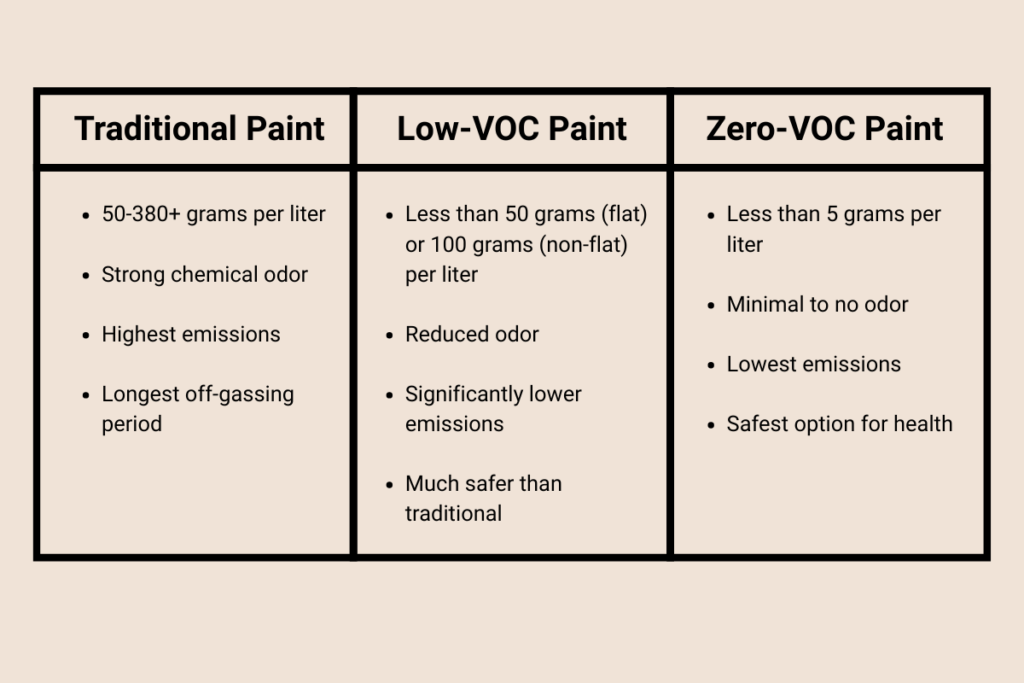
Flat paints with fewer than 50 grams of VOCs per liter are considered low-VOC, while non-flat finishes like satin and semi-gloss are low-VOC if they contain fewer than 100 grams per liter.
Low-VOC paints dramatically reduce harmful chemical emissions. They’re a significant improvement over traditional paints and work well for most residential projects.
Benefits of low-VOC paint:
- Reduced chemical odor during application and drying
- Improved indoor air quality
- Safer for painters and occupants
- More environmentally friendly
- Quick drying time
- Available in wide range of colors and finishes
Understanding Zero-VOC Paint
Zero-VOC paint contains fewer than 5 grams of VOCs per liter—drastically lower than both traditional and low-VOC options.
This makes them the safest choice for indoor air quality.
Benefits of zero-VOC paint:
- Virtually no chemical odor
- Minimal off-gassing
- Safest option for children’s rooms, nurseries, and bedrooms
- Ideal for people with asthma, allergies, or chemical sensitivities
- Can reoccupy rooms almost immediately after painting
- Environmentally sustainable
Low-VOC vs Zero-VOC: Which Should You Choose?
Choose Low-VOC paint when:
- Budget is a primary concern (lower cost than zero-VOC)
- Painting high-traffic areas needing maximum durability
- You need specialty finishes not available in zero-VOC
- The space has excellent ventilation
Choose Zero-VOC paint when:
- Painting nurseries, children’s rooms, or bedrooms
- Anyone in your home has respiratory issues or chemical sensitivities
- You can’t vacate the home during painting
- Indoor air quality is a top priority
- Painting spaces with poor ventilation
Best Non-Toxic Paint Brands
Several manufacturers offer excellent low-VOC and zero-VOC options:
Sherwin-Williams ProMar 200 Zero VOC: Professional-grade zero-VOC paint offering excellent coverage and durability for larger projects.
All major paint manufacturers now offer low-VOC and zero-VOC lines, making healthy paint choices accessible and affordable.
Sherwin-Williams Harmony: Passes the strictest GreenGuard Certification standards and is “GreenGuard Indoor Air Quality Certified” and “GreenGuard Certified for Children and Schools”. Excellent for families prioritizing health.
Benjamin Moore Natura: True zero-VOC paint with zero emissions. Available in thousands of colors with excellent coverage and durability.
Behr Premium Plus Ultra: Affordable low-VOC option widely available at Home Depot. Good balance of price and performance.
Tips for Using Low-VOC and Zero-VOC Paint
Improve ventilation: Even with low-VOC paint, open windows and use fans during application and drying. Good airflow speeds drying and removes any lingering odors.
Allow proper drying time: Low and zero-VOC paints often dry more quickly than traditional paints—sometimes by hours. However, full curing still takes days. Wait 24-48 hours before moving furniture back.
Consider multiple coats: Some zero-VOC paints require additional coats for full coverage compared to traditional paints. Factor this into your project timeline and paint quantity calculations.
Ask about colorants: When having paint tinted, ask if the colorants are also low-VOC. Some colorants add VOCs back into the paint, reducing health benefits.
Choose appropriate finishes: Low-VOC and zero-VOC paints are available in all finishes—flat, eggshell, satin, semi-gloss. Select based on room function and traffic level, not just VOC content.
Professional Application Matters
While paint choice matters enormously, professional application ensures optimal results.
Experienced painters understand how low-VOC and zero-VOC paints behave differently—they may require adjusted application techniques, different drying times between coats, and specific surface preparation.
Professional painters also know which brands and formulations work best for different surfaces and conditions, ensuring your investment in healthier paint delivers lasting, beautiful results.
Making the Switch to Non-Toxic Paint
Transitioning to low-VOC or zero-VOC paint is one of the simplest, most impactful changes you can make for your home’s indoor air quality. Whether you’re painting a single room or your entire house, choosing healthier paint options benefits everyone who lives in and visits your space.
If you’re in southeastern Pennsylvania or New Jersey and ready to paint with low-VOC or zero-VOC options, we’re here to help. Our team has extensive experience working with all major non-toxic paint brands and can guide you toward the best options for your specific project and priorities.
Contact us today for a free consultation. We’ll discuss your goals, recommend the healthiest paint options for your needs, and provide a detailed estimate. Your family’s health and your home’s beauty both matter—you don’t have to choose between them.