
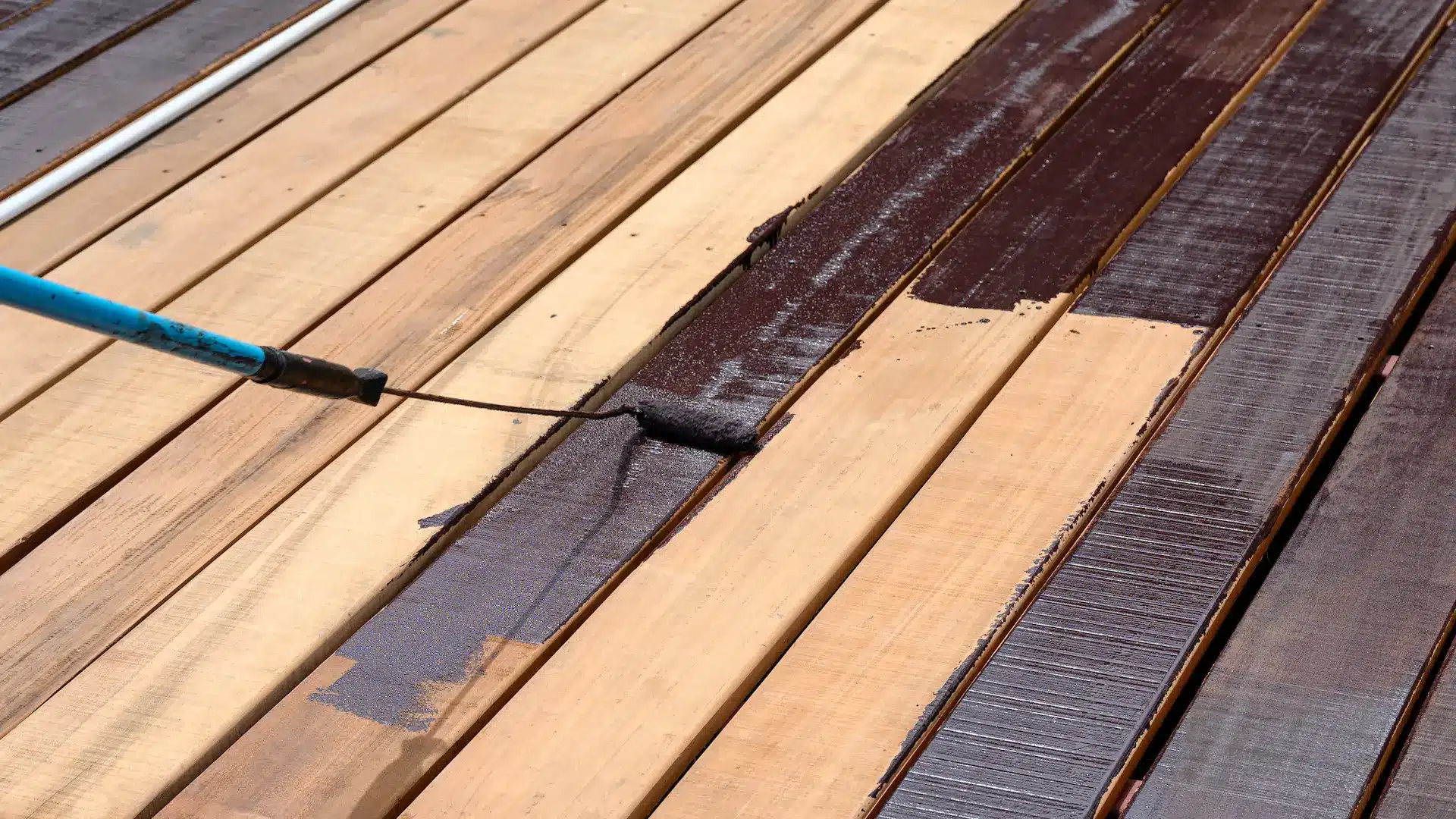
Davis Painting provides professional deck staining across Pennsylvania, including cleaning, preparation, and sealing.
Yes, you can often stain a deck in October here. But the afternoon temperature is not what decides it.
Most stains need the surface to stay above a minimum temperature for hours after application, frequently overnight, and they need the wood genuinely dry when the stain goes on. In a Pennsylvania October, the overnight low and the morning dew decide far more than the sixty degree afternoon that made you think about it.
It is a mild Saturday, the deck has needed doing since June, and the can is sitting in the garage. Worth checking a few things before you open it rather than after.
- What actually decides whether you can stain a deck in October?
- The overnight low matters more than the afternoon high
- The wood has to be dry, and one dry afternoon is not enough
- October dew is the factor nobody accounts for
- The 48 hour forecast decides as much as the day itself
- How do you tell if this particular week will work?
- Read the product label, because thresholds vary
- Work the middle of the day, not the whole day
- When waiting until spring is the better call
- What to do with the deck if you are waiting
- Check the Overnight Low Before You Open the Can
What actually decides whether you can stain a deck in October?
Four things decide it: the overnight low rather than the daytime high, since most stains need the surface above a minimum temperature for hours after application and many products specify around 50°F; the moisture content of the wood, which needs a genuinely dry spell beforehand rather than one dry afternoon; morning dew, which in October can leave a deck damp well into the day; and the 24 to 48 hour forecast, because rain on uncured stain means starting over.
The overnight low matters more than the afternoon high
Stain keeps curing for hours after it goes on. In October, that curing period runs straight into a cold night.
Many products specify a minimum temperature not just at application but for a period afterwards, commonly around 50°F though it varies by product, and the label is what counts. A 65 degree afternoon followed by a 40 degree night is a completely different job from a 65 degree afternoon followed by a 55 degree night.
Check the overnight forecast. That is the number that decides it.
The wood has to be dry, and one dry afternoon is not enough
Wood holds moisture well after the surface looks dry to the eye.
Stain applied to damp wood will not penetrate properly. You get blotching, early peeling, or patches where it simply refuses to absorb. A few consecutive dry days beforehand matters far more than how the deck looks on the morning itself.
If the deck is being cleaned or power washed as part of the prep, that drying time has to be built into the schedule afterwards. This is the step most people skip, and it is the most common cause of a failed autumn stain job.
October dew is the factor nobody accounts for
Shorter days and cooler nights produce heavy morning dew, and a deck can stay damp until mid morning or considerably later in shade.
That compresses your usable working window into a few hours in the middle of the day.
Dew settling on stains that have not cured also damages the finish, which means stopping well before evening rather than working until you lose the light.
The 48 hour forecast decides as much as the day itself
Rain on uncured stain means it comes off and the job starts again, preparation included.
In an October weather pattern with fronts moving through every few days, finding a clear 48 hour window is often a bigger constraint than the temperature is.
How do you tell if this particular week will work?
Check four things before committing a weekend. Has it been dry for several consecutive days, is the overnight low staying above the minimum your product specifies, is the 48 hour forecast clear, and does the deck dry out by mid morning rather than staying damp in shade. If all four hold, October staining in Pennsylvania generally works. If overnight lows have started dropping into the thirties, the honest answer is usually to wait for spring.
Read the product label, because thresholds vary
The most useful thing you can do before anything else.
Minimum application temperature and minimum cure temperature are both printed on the can, and they differ between products. Oil based and water based stains behave differently in cool conditions.
Look specifically for the minimum temperature for the hours after application. That is the number most people miss and the one that causes failures.
Work the middle of the day, not the whole day
The usable window in October runs roughly from late morning, once the dew has burned off, to mid afternoon, leaving curing time before evening damp returns.
That is a much shorter day than June. A deck that took one day in summer may need two in October, and homeowners planning a single Saturday frequently run out of usable hours and finish in conditions they should not be working in.
When waiting until spring is the better call
If overnight lows are regularly dropping into the thirties, if there has been no dry stretch, or if the forecast will not give you a clear 48 hours, waiting is the right answer.
A deck left one more winter weathers a bit. A stain job that fails needs stripping and redoing, which costs considerably more than waiting did.
We will tell you when conditions are not right rather than taking the booking. You can check your own overnight lows and 48 hour forecast on the National Weather Service site in about a minute.
What to do with the deck if you are waiting
Clear leaves and debris regularly. Wet leaves left sitting on boards trap moisture and cause staining and rot over a winter, which makes the spring job bigger.
Keep furniture off the boards or on pads.
And book early for spring. Deck work concentrates into a short window once the weather turns, and the good dates go first.
Check the Overnight Low Before You Open the Can
The night temperature and the dew decide this, not the afternoon that made you think of it. And a failed stain job costs more than one more winter of waiting does.
Talk to Davis Painting about deck staining anywhere in Pennsylvania this autumn if conditions hold, or on the spring schedule if they do not.