Davis Painting provides limewashing services and traditional exterior painting services across Pennsylvania for residential properties and the most useful thing an experienced lime wash painter can tell a homeowner who is choosing between the two is that this is not a question about which is better, but which is right for a specific home. The difference between limewashing and traditional exterior paint comes down to material, surface, and aesthetic intent, and understanding those three variables makes the decision clear.
You have been looking at limewash images online. Your house is either the right candidate or it is not. This article gives you the honest comparison and ends with a clear next step from a company that applies both finishes and has a professional interest in matching you to the right one.
In this article:
What is the actual difference between limewashing and traditional exterior paint and why does it matter for your decision?
Traditional exterior paint sits on top of the surface as a film coating. Limewash is a calcium hydroxide solution that penetrates porous surfaces like brick, stone, and masonry and becomes part of the substrate rather than a layer above it. This penetration is why limewash produces a soft, translucent, naturally variable finish that paint cannot replicate and why it only works on surfaces with the porosity to absorb it.
How they look and why limewash cannot be replicated by paint
Paint produces a uniform, consistent colour and sheen across the entire surface. Limewash produces a finish where the depth and texture of the underlying material show through soft, slightly variable, and organically different from one section of wall to the next. That variation is the aesthetic point. It is what gives limewash the quality that interior design content has been capturing for years and that paint simply cannot fake. Two homes finished with the same limewash colour can look meaningfully different from each other based on the underlying surface, which is either the feature that appeals to you or the one that rules it out.
How they age and which is easier to maintain
Paint films peel, chip, and blister when they fail, and the failure is visible and unmistakable. Limewash fades and lightens gradually over time in a way that reads as patina rather than deterioration. It can be refreshed with a new application without stripping the old one. For homeowners on older brick or stone homes in Pennsylvania, limewash aging is often significantly more manageable than watching a conventional paint job fail and require full removal before repainting. The National Park Service preservation brief on lime-based finishes documents the centuries-long track record of lime coatings on masonry structures and why they remain the standard for historical restoration painting on period properties.
Which Pennsylvania homes are right for limewash and where does conventional exterior paint still make more sense?
Limewash works on porous mineral surfaces including brick, stone, concrete block, and natural plaster surfaces where the lime solution can penetrate rather than coat. Traditional exterior paint is the better choice for vinyl siding, wood, previously sealed surfaces, and any surface where a uniform consistent colour is required. Davis Painting applies both finishes across Pennsylvania and assesses surface suitability during the consultation before recommending either.
Where limewash wins: brick, stone, and masonry homes in Pennsylvania
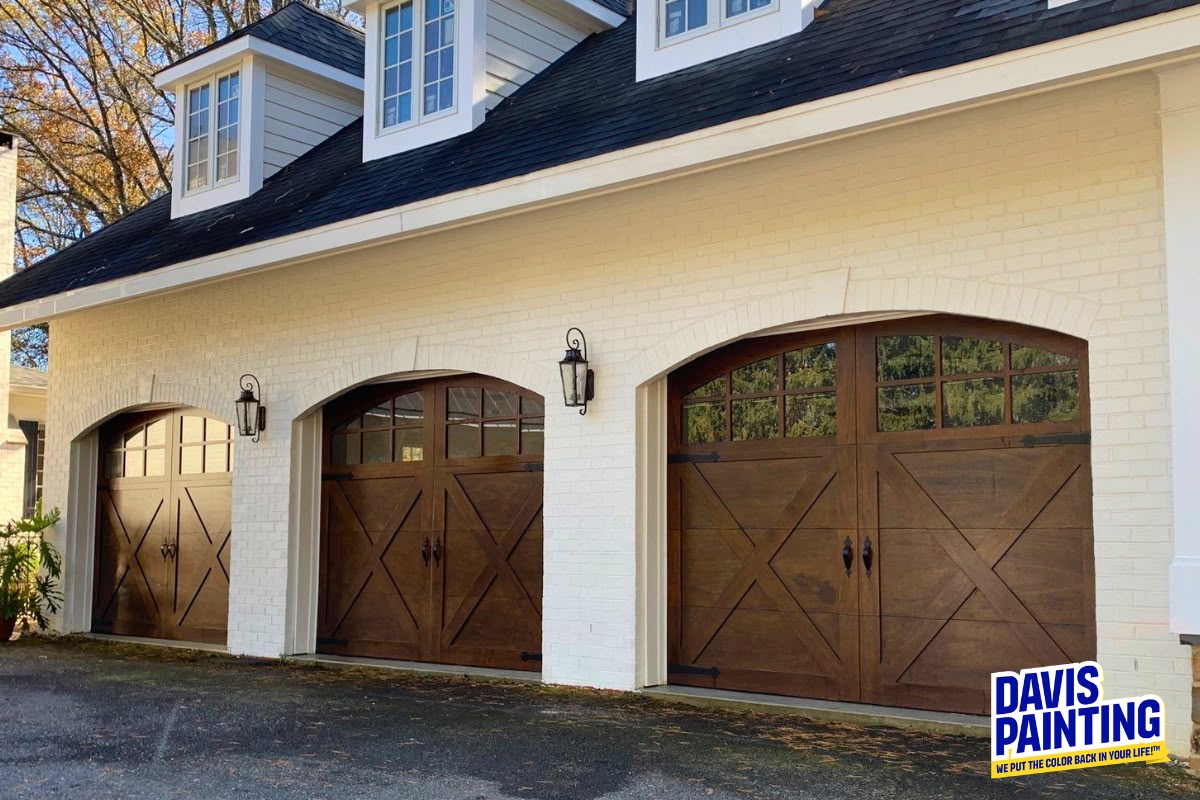
Brick colonials, stone farmhouses, and stucco exteriors across Chester, Bucks, and Montgomery counties are the primary limewash candidates. The lime solution absorbs into these surfaces and produces the authentic, historically rooted finish the material was developed for centuries ago. Interior applications are also strong limewash territory brick accent walls, original brick in foyers, and masonry in dining rooms all respond to limewash the same way the exterior does, because the material is surface-driven rather than application-location-driven.
Where conventional exterior paint is still the right call
Vinyl siding cannot absorb a lime solution. Limewash applied to vinyl sits on the surface rather than penetrating it and produces none of the depth and variation that makes the finish worth choosing. Wood siding, previously painted and fully sealed surfaces, and any exterior where colour uniformity is a requirement are conventional paint territory. If you want a clean, consistent colour across a large vinyl or wood exterior, exterior painting services are the right answer and there is nothing secondary about that choice. The best finish for your home is the one that performs correctly on your specific surface and achieves the result you are actually after.
The decision framework in one sentence: if your home has unpainted or minimally painted brick, stone, or masonry, limewash is worth a consultation. If your home has vinyl, sealed wood, or any surface that requires colour uniformity, conventional exterior paint is the choice.
The Right Finish Starts with the Right Surface We Will Tell You Which One Yours Is
You have the comparison. Now the question is whether your specific home and your specific surfaces are limewash candidates. Davis Painting assesses both in a single free consultation and will tell you clearly which finish is the right call before anything is scheduled.
Book a free limewash consultation with Davis Painting and find out whether limewashing services are right for your Pennsylvania home or whether a conventional exterior repaint is the better investment.